How Much Does Spray Foam Insulation Cost in St. George, UT? The Complete 2026 Pricing Guide
If you've searched "spray foam insulation cost St. George Utah," you already know the honest answer is frustrating: it depends. Spray foam pricing isn't a single number you can look up the way you'd check a gallon of milk — it's a function of square footage, foam type, application area, attic access, and how much old material has to come out before a crew can even start spraying. What follows is the most detailed, most specific breakdown of spray foam insulation pricing available for Washington County, Utah, covering St. George, Washington City, Hurricane, Santa Clara, Ivins, and the LaVerkin/Toquerville corridor — built from real per-square-foot ranges, real job types, and the real cost drivers that separate a $1,800 rim joist job from a $14,000 whole-home retrofit.
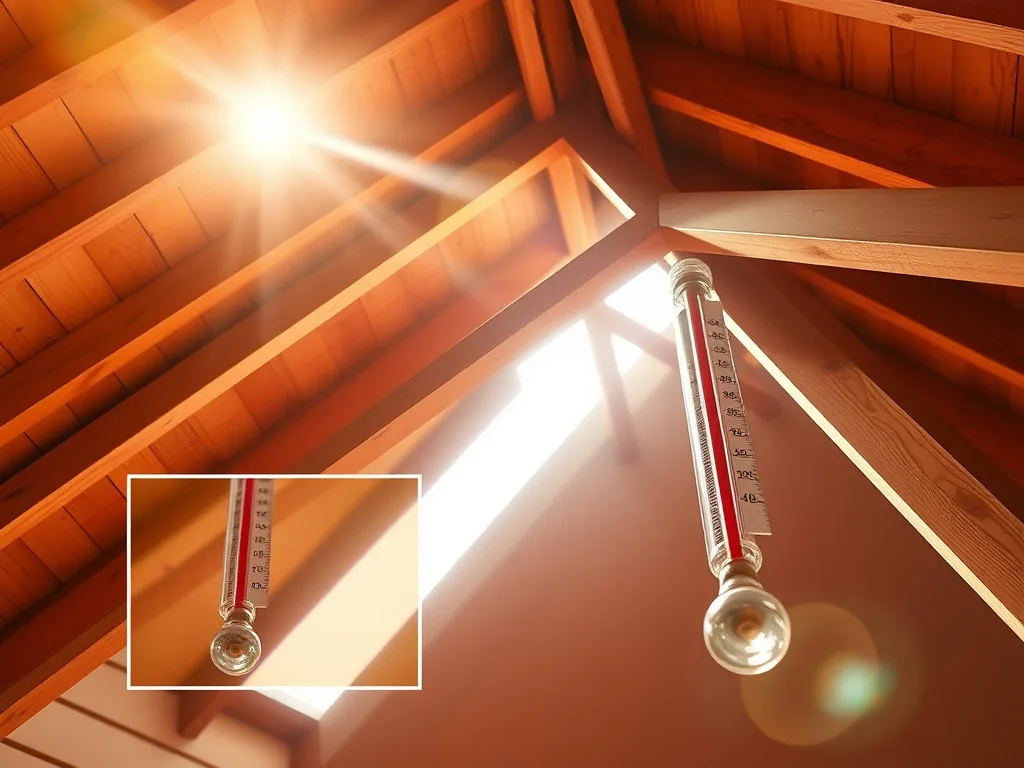
One thing you won't find in this guide: heating season, ice dams, or snow load. This is St. George. Our summers run 104-106°F in July, 100°F+ stretches are normal from mid-June through early September, and a dark, sun-baked roof deck can hit 130-150°F or hotter on a July afternoon — radiating that heat straight into your ductwork and ceiling drywall. Every dollar figure in this guide is framed around the thing that actually matters here: cutting cooling load and shrinking your Rocky Mountain Power or Dixie Power summer electric bill.
We're also going to be upfront about who's writing this. We're not a general insulation company that also does spray foam — spray foam is the only thing we do, which is why we do it better than anyone else in Washington County. That focus is part of why our pricing looks the way it does: no crews splitting attention between blown-in cellulose one week and spray foam the next, just rigs, technicians, and scheduling built around one application.
What Determines Spray Foam Insulation Cost in St. George
Every spray foam quote in Washington County comes down to five variables stacked on top of each other: the square footage being treated, whether you need open-cell or closed-cell foam (or a combination), the application area (attic, wall, crawl space, garage, rim joist, or new construction shell), how difficult the space is to access, and how much foam depth is required to hit code R-values. Get a quote that doesn't walk through these five things and you're getting a guess, not an estimate.
- Square footage of the area being sprayed (attic deck, wall cavity square footage, crawl space floor area, garage walls/ceiling, rim joist linear footage)
- Foam type — open-cell or closed-cell (or both, layered in a hybrid assembly)
- Foam depth/thickness required to hit 2021 IECC Climate Zone 3B code R-values
- Access difficulty — attic height, crawl space clearance, roof pitch, existing framing
- Whether old insulation (batts, blown-in, or failed foam) has to be removed and hauled off before spraying can start
Open-Cell vs. Closed-Cell Spray Foam: Price Per Square Foot
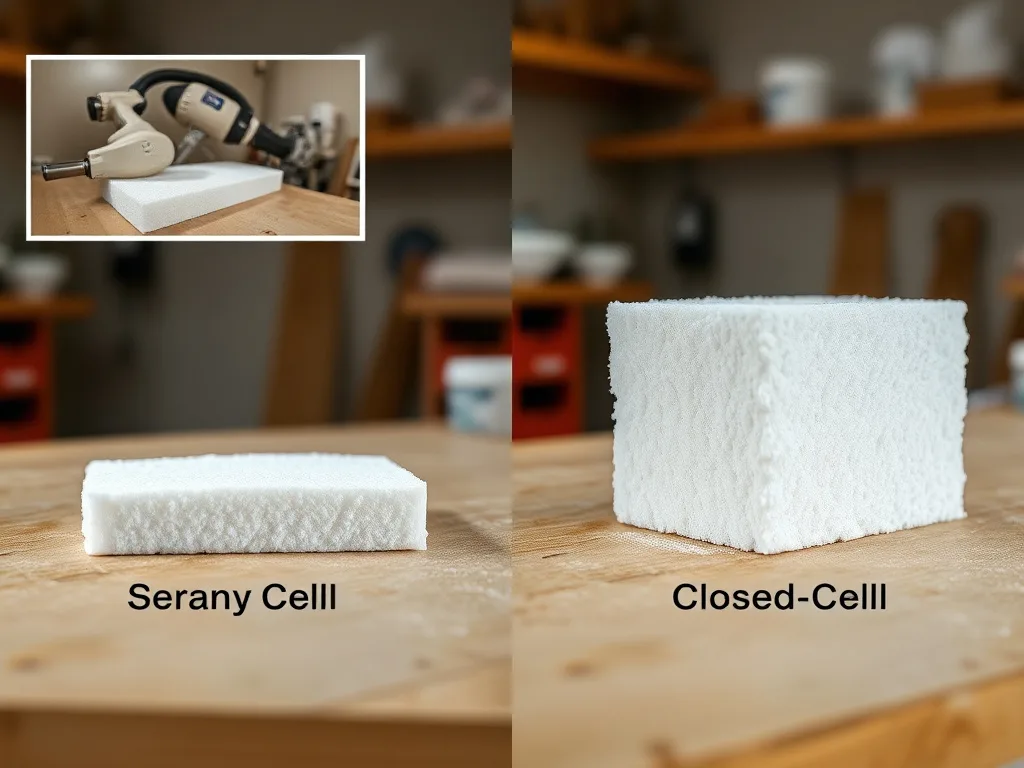
Installed spray foam in the St. George market generally runs $1.50 to $5.00 per square foot, with open-cell foam landing at the lower end of that range and closed-cell foam landing at the higher end. The spread exists because the two products are genuinely different materials solving different problems — not because one is simply a "cheaper version" of the other.
- Open-cell spray foam: roughly $1.50-$2.75 per sq ft installed, expanding to roughly R-3.5 to R-3.7 per inch. Lower material cost, faster expansion, excellent air-sealing for interior walls and non-roof-deck attic applications.
- Closed-cell spray foam: roughly $2.75-$5.00 per sq ft installed, delivering roughly R-6 to R-7 per inch. Higher density, rigid structural add-on value, and meaningfully better performance against monsoon-season moisture intrusion.
Our open-cell spray foam service is usually the right call for interior wall cavities and attic spaces that aren't taking direct roof-deck heat load — in a dry desert climate like ours, the moisture-resistance gap that matters so much in humid regions is a much smaller factor, so you're not overpaying for a moisture barrier you don't need. Our closed-cell spray foam service earns its higher per-square-foot price on roof decks, rim joists, and any exterior-adjacent assembly absorbing direct desert sun, where the extra R-value per inch and the added structural rigidity pay for themselves in both comfort and long-term durability against monsoon moisture.
Cost by Application Area
Per-square-foot pricing only tells part of the story — where the foam goes changes both the labor intensity and the total square footage involved. Here's how cost typically breaks down by area for a St. George-area home.
Attic & Roof Deck
Attic and roof-deck work is usually the single largest line item on a whole-home job, simply because it covers the most square footage. Converting a vented attic into a sealed, conditioned assembly with closed-cell foam on the underside of the roof deck is the core of our attic and roof-deck spray foam insulation service, and it's the single most effective move a St. George homeowner can make against the "hot roof deck problem" — a dark shingle roof in direct July sun can push roof-deck surface temperatures to 130-150°F or beyond, and that heat radiates straight down into ductwork and ceiling drywall all afternoon and evening. A typical 1,800-2,400 sq ft attic runs from roughly $4,500 on the low end (open-cell, simpler geometry, good access) to $10,000+ for closed-cell roof-deck encapsulation on a larger or more complex roofline.
Wall Cavities
Wall cavity work is priced per square foot of wall area, and cost depends heavily on whether you're insulating open framing during a remodel (cheap and fast) or injecting/spraying into existing finished walls (slower, more labor per square foot). Our wall cavity spray foam insulation service is a frequent fix for the classic St. George complaint: a west- or south-facing bedroom that stays hot well into the evening long after the sun goes down, because old, settled fiberglass batts have compressed and left gaps. Expect roughly $1.50-$3.50 per sq ft of wall area depending on foam type and whether existing material needs to be removed first.
Crawl Space
Crawl spaces get hit with a double dose of St. George summer: ground-radiated heat rising up through the floor, plus monsoon-season moisture intrusion from flash-flood runoff and humidity spikes. Our crawl space spray foam insulation service applies closed-cell foam directly to the crawl space walls and rim area — this is spray-foam-application work only, not a vapor-barrier-and-batt system. Pricing usually runs $2,500-$6,000 depending on square footage and how much clearance a technician has to work in; tight, low-clearance crawl spaces cost more per square foot because the work is physically slower.
Garage
An uninsulated St. George garage can exceed 120-130°F in mid-summer, and that heat doesn't stay contained — it radiates through the shared wall into whatever living space sits next door, whether that's a bedroom, laundry room, or bonus room above. Our garage spray foam insulation service typically runs $1,800-$4,500 for a standard two-car garage, covering ceiling and shared-wall assemblies, and it's also the move that makes a garage usable as a workshop, gym, or hobby space through the hottest months instead of a space you avoid from June through September.
Rim Joist / Band Joist
The rim joist — the band of framing that sits on top of the foundation wall around the entire perimeter of the house — is one of the most chronic, most overlooked air-leak points in any home. Our rim joist and band joist spray foam insulation service seals this perimeter with closed-cell foam, stopping both hot-air infiltration in summer and monsoon-season dust and debris intrusion. Because it's linear-footage work rather than broad-area work, it's one of the more affordable additions on this list — typically $800-$2,200 depending on the home's perimeter length and crawl space or basement access — and it's a common, easy upsell tacked onto an attic or crawl space job since the crew and equipment are already on site.
New Construction
For builders and GCs working the St. George growth corridor — Washington Fields, Little Valley, Desert Color, Hurricane, and the surrounding subdivisions — our new construction spray foam insulation service is priced per square foot of conditioned floor area across the whole shell, typically $2.25-$4.50 per sq ft depending on the open-cell/closed-cell mix specified. Spraying open framing in one trade visit is dramatically more efficient than retrofit work, and it lets a builder hit or exceed 2021 IECC Climate Zone 3B code minimums — attic R-38 to R-49, wall R-13 to R-21 depending on assembly, and crawl space per local code — without stacking multiple insulation trades on the schedule.
What Drives Price Up
Two identical-sized attics can carry very different price tags, and it almost always comes down to one or more of the following.
- Access difficulty — low-clearance attics, steep roof pitches, cramped crawl spaces, and finished walls without open framing all slow a crew down and add labor hours.
- Removal of old insulation first — pulling out failed batts, disturbed blown-in material, or old rodent-contaminated insulation before foam can go in adds a separate line item, often $0.50-$1.00 per sq ft on top of the foam application itself.
- Foam depth needed to hit code R-values — reaching R-49 in an attic takes meaningfully more closed-cell material (and cost) than reaching R-38, and thicker closed-cell fill in a rim joist or wall cavity scales cost close to linearly with depth.
- Roofline and framing complexity — dormers, vaulted sections, multiple roof planes, and irregular framing all add square footage and labor beyond a simple rectangular attic.
- Scheduling around monsoon season — crawl space and rim joist jobs booked during active monsoon weeks sometimes require moisture mitigation steps first, which can add a modest surcharge.
Realistic Total-Job Price Ranges
Pulling all of the above together, here's what most St. George homeowners and builders should realistically expect to budget, start to finish.
- Rim joist / band joist only: $800-$2,200
- Garage (ceiling + shared wall, standard 2-car): $1,800-$4,500
- Crawl space only: $2,500-$6,000
- Attic / roof-deck only (1,800-2,400 sq ft home): $4,500-$10,000+
- Wall cavities only (per project, partial-home): $2,000-$6,500
- Whole-home retrofit (attic + walls + rim joist combined): $9,000-$18,000+
- New construction shell (per sq ft of conditioned floor area): $2.25-$4.50/sq ft
These are ranges, not quotes — the only way to get an exact number for your specific home is a walkthrough. But if a number you're seeing elsewhere sounds wildly outside these ranges in either direction, that's worth a second opinion.
Financing Options
Spray foam is a bigger upfront investment than a bag of blown-in cellulose, and we get that a $9,000-$18,000 whole-home number is not a small check to write. Most St. George customers handle the cost one of a few ways: paying in full at completion, splitting the job into phases (attic first, then walls or crawl space in a later season), or using third-party home-improvement financing through a lender partner, which spreads payments out over months instead of requiring the full amount at once. We can walk through financing options during your quote — call 844-967-5247 or email josh@contractorschoiceagency.com and we'll lay out what's available for a job your size.
It's also worth checking whether your project qualifies for a Rocky Mountain Power Wattsmart Homes rebate. Rebate eligibility and amounts vary by project scope and change periodically, so confirm current terms directly with Rocky Mountain Power or ask us during your quote — we can tell you whether your planned scope of work is the kind of upgrade that program typically covers.
ROI: How Spray Foam Pays You Back in Summer AC Savings
Here's the framing that actually matters in Washington County: this is not a heating-savings product for us, and we're not going to pretend it is. St. George's cooling season stretches from May through September, with the brutal stretch running mid-June through early September, and your air conditioner is working overtime that entire window fighting heat gain through an under-insulated attic, walls, and rim joist. Spray foam's payback here comes almost entirely from reduced AC runtime and lower Rocky Mountain Power or Dixie Power summer electric bills, not from anything related to winter heating costs.
Payback timelines vary by project scope, home size, and your existing insulation condition, but the pattern holds across the whole product line: attic and roof-deck work delivers the largest single reduction in cooling load because it addresses the biggest heat-gain surface in the house; wall cavity work meaningfully improves comfort in west- and south-facing rooms that otherwise stay hot into the evening; crawl space and rim joist work reduce the ground-radiated and perimeter-infiltration heat gain that otherwise forces your AC to fight a losing battle from below and around the edges of the house. None of this is framed around ice dams, snow load, or heating bills — in a Zone 3B desert market like ours, that framing simply doesn't apply, and any contractor quoting you on heating payback in St. George is using boilerplate written for a different climate.
Why a Spray-Foam Specialist's Pricing Looks the Way It Does
You'll notice our pricing doesn't include line items for blown-in cellulose, batt insulation, energy audits, or rebate paperwork as standalone services — that's deliberate. We're not a general insulation company that also does spray foam; spray foam is the only thing we do, which is why we do it better than anyone else in Washington County. Every truck, every rig, every technician on our crew is built around one application method, which means our pricing reflects genuine spray foam expertise rather than a general contractor's markup on a product line they handle occasionally.
Getting an Accurate Quote
Every number in this guide is a starting point, not a substitute for a walkthrough. Square footage, access, existing insulation condition, and the R-value target for your specific assembly all shift the final price, and the only way to nail those down is an in-person look at your attic, walls, crawl space, garage, or rim joist. We quote jobs across St. George, Washington City, Hurricane, Santa Clara, Ivins, and the LaVerkin/Toquerville area. Call 844-967-5247 or email josh@contractorschoiceagency.com to get a firm number for your home or project.
Frequently asked questions
Most St. George projects fall between $1.50 and $5.00 per square foot installed, with open-cell foam at the lower end and closed-cell foam at the higher end. Whole-home retrofits combining attic, walls, and rim joist typically total $9,000-$18,000+, while single-area jobs like a rim joist or garage run from a few hundred to a few thousand dollars.
Per square foot, yes — closed-cell runs roughly $2.75-$5.00 versus roughly $1.50-$2.75 for open-cell. But closed-cell also delivers roughly double the R-value per inch (R-6 to R-7 versus R-3.5 to R-3.7), so fewer inches of closed-cell can match or beat a thicker application of open-cell, which sometimes narrows the total cost gap on a roof-deck or rim joist job.
The biggest swing factors are access difficulty (attic height and roof pitch), whether old insulation has to be removed first, and how much foam depth is needed to hit code R-values like R-49. Two 2,000 sq ft attics can differ by thousands of dollars once you account for those variables.
Yes — that's the entire ROI case for spray foam in a desert cooling-load climate like St. George. Sealing the attic and rim joist and filling wall cavities reduces how much 130-150°F roof-deck and radiated wall heat makes it into your conditioned space, which means your AC cycles less and runs shorter stretches on peak summer afternoons.
Yes. Most customers either pay at completion, phase the project across seasons (attic first, walls or crawl space later), or use third-party home-improvement financing to spread payments over time. Call 844-967-5247 to discuss options for your project size.
For most St. George homes, attic and roof-deck work delivers the largest single reduction in cooling load because it addresses the biggest heat-gain surface in the house. Crawl space work is a strong second priority, especially if you're also dealing with monsoon-season moisture intrusion underneath the home.
Almost always yes. Because the crew, rig, and foam are already on site, adding rim joist sealing is one of the most cost-effective upsells available — typically $800-$2,200 on its own — and it closes off a chronic air-leak point that otherwise keeps letting hot air and monsoon dust in around the entire foundation perimeter.
Yes — we quote and install throughout Washington County, including St. George, Washington City, Hurricane, Santa Clara, Ivins, and the LaVerkin/Toquerville area.
Ready for a free quote?
Tell us about your home and we'll build a clear, no-pressure quote.