Open-Cell Spray Foam Insulation
A lighter-density, more economical spray foam that air-seals interior walls and attic floor assemblies, cutting the air leakage that drives up AC bills through St. George's long cooling season.
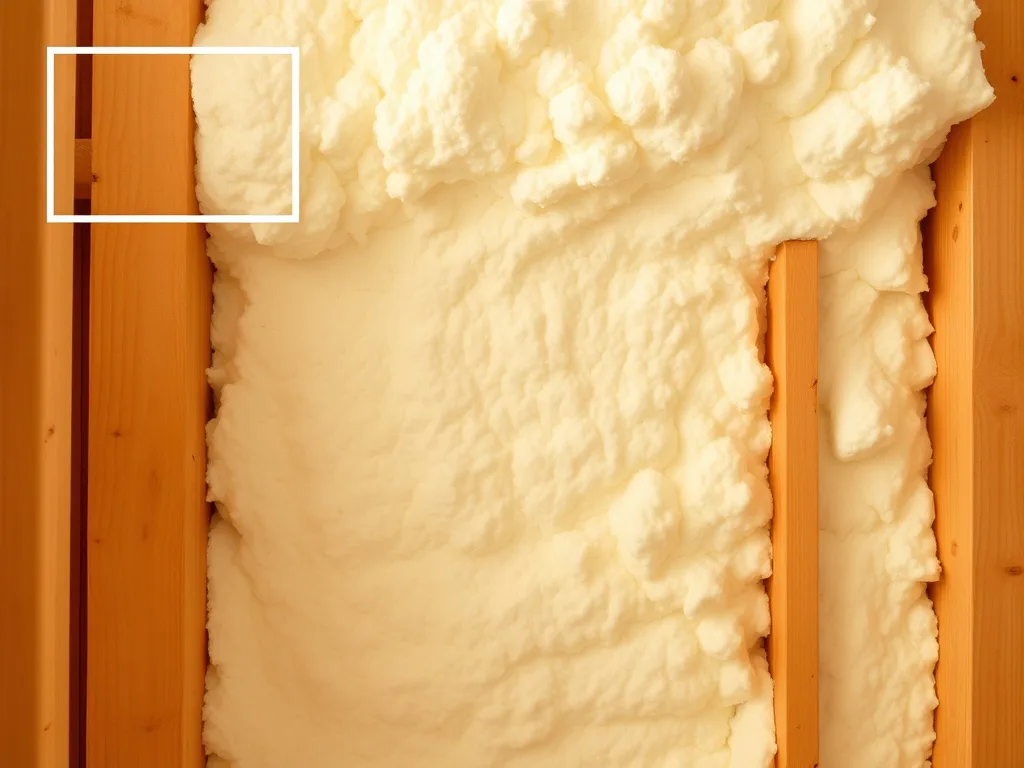
Open-cell spray foam is the entry point into professional-grade air sealing for St. George homeowners who want to stop conditioned air from leaking out of their house without paying closed-cell prices for every square foot. It expands to roughly 100 times its liquid volume, filling wall cavities, rim spaces, and attic floor assemblies with a soft, spongy foam that locks out the hot, dry desert air pushing through gaps around wiring, plumbing penetrations, top plates, and stud bays all summer long.
At around R-3.5 to R-3.7 per inch, open-cell delivers a lower R-value per inch than closed-cell foam, but in a full-depth wall cavity or attic floor application it still reaches strong whole-assembly R-values, and its real advantage is air sealing performance combined with a lower installed cost. For interior walls and attic-floor work that isn't taking direct roof-deck heat load, that trade-off makes open-cell the smart, budget-conscious choice for a large share of Washington County homes.
Homeowners in St. George, Washington City, Hurricane, Santa Clara, and Ivins deal with a cooling season that stretches from May through September, and every gap in a wall cavity or attic floor is a place where hot outdoor air finds its way into conditioned living space. Fiberglass batts slow heat transfer, but they don't stop air movement - gaps around outlets, top plates, and duct penetrations keep leaking no matter how thick the batt is. Open-cell foam solves the air-movement half of that equation directly, which is why it's become the standard upgrade for homeowners tired of a house that never quite feels cool no matter how hard the AC runs.
We're not a general insulation company that also does spray foam - spray foam is the only thing we do, which is why we do it better than anyone else in Washington County. Every crew member on your job installs foam five days a week, not fiberglass batts one week and foam the next, and that focus shows up in cleaner cavity fills, tighter cut lines, and fewer callbacks. When you call 844-967-5247 or email josh@contractorschoiceagency.com, you're talking to a team whose entire business is spray foam, not a subcontractor squeezed in between other trades.
Why homeowners choose it
- Lower installed cost per square foot than closed-cell, making whole-house or whole-attic projects more affordable
- Excellent air-sealing performance that stops hot, dry outdoor air from infiltrating conditioned living space
- Expands fully into irregular wall cavities, around wiring and plumbing, and into hard-to-reach stud bays
- Dampens interior sound transfer between rooms better than batt insulation, a real comfort upgrade in open St. George floor plans
- Lightweight, non-load-bearing formulation that won't add structural stress to ceiling or wall framing
- Pairs cleanly with closed-cell foam on the same job when a home needs both wall coverage and roof-deck protection
What Open-Cell Spray Foam Is - and Isn't
Open-cell spray foam is a two-part polyurethane spray that cures into a soft, flexible foam full of tiny open cells, which is where it gets its name and its lighter density. That open-cell structure is what makes it expand so aggressively during installation, filling every corner of a wall cavity or attic floor joist bay without the pressure buildup that can bow thin drywall or sheathing.
It is not a moisture barrier in the way closed-cell foam is, and it is not the right choice for direct roof-deck spraying, exterior-adjacent assemblies, or below-grade crawl space walls where high density and vapor resistance matter most. Those applications belong to closed-cell foam. Open-cell earns its place in interior walls and attic floor work, where air sealing and cost efficiency are the priorities and moisture exposure is minimal.
The soft, flexible cell structure also has a practical installation benefit: it conforms around obstructions - electrical boxes, plumbing runs, HVAC ductwork, blocking - without the pressure that dense closed-cell foam can exert on thin materials. In a retrofit wall cavity full of wiring and old fixtures, that flexibility often means a cleaner, faster, less disruptive install than trying to force closed-cell into the same space.
Where Open-Cell Makes Sense in a St. George Home
The most common open-cell application we install is interior wall cavities - both in new construction framing before drywall goes up and in remodels where walls are opened for other work. Filling those cavities with open-cell foam air-seals the wall assembly and adds meaningful sound dampening between rooms, which matters in the open, great-room-style floor plans common across St. George, Washington City, and the newer neighborhoods around Ivins and Santa Clara.
The second common application is attic floor insulation in homes that keep a traditional vented attic rather than converting to a sealed, conditioned roof deck. Spraying open-cell across the attic floor, sealing top plates, can lights, plumbing stacks, and duct boots, closes off the air leakage pathways that let 130-150°F+ superheated attic air infiltrate the living space below during the long St. George cooling season. It's a more affordable way to tighten the building envelope than full roof-deck conversion, and for many homes it delivers the bulk of the comfort improvement at a fraction of the cost.
We also install open-cell in additions and remodels around Desert Color, Little Valley, and the newer subdivisions off Washington Fields Road, where framing is opened up for other work and it makes sense to air-seal while the walls are exposed rather than closing them up with nothing but batts. And in multi-bedroom homes, we're increasingly asked to spray open-cell into interior partition walls purely for sound control - between a primary suite and an adjacent laundry room, or around a home theater or office, where the acoustic benefit matters as much as the thermal one.
- Interior wall cavities in new builds and remodels
- Attic floor assemblies in homes keeping a vented attic
- Rim areas and transition zones alongside other insulation work
- Sound-dampening upgrades for interior partition walls
Why Dry Desert Air Changes the Open-Cell Equation
In humid climates, open-cell's lower vapor resistance can be a real liability - moisture works its way into the wall assembly and the open-cell structure doesn't stop it the way closed-cell does. St. George doesn't have that problem for most of the year. Washington County sits in a genuine hot desert climate, and outside of the mid-July through mid-September monsoon window, ambient humidity stays low enough that open-cell's moisture permeability is rarely a functional issue in a typical interior wall or attic floor application.
That's a meaningful cost advantage for local homeowners. In a wetter climate, contractors often have to default to closed-cell everywhere to manage moisture risk, driving the entire job's price up. Here, we can right-size the foam to the application - open-cell where air sealing and budget are the priority, closed-cell where roof-deck heat load or monsoon-season moisture intrusion demands it - and deliver the same building-science outcome for less money.
This is also why we don't recommend open-cell blindly. During the monsoon window, wind-driven moisture can find its way into exterior wall assemblies or attic spaces near roof penetrations, and we'll flag any spot on your home where that risk is elevated - a leaky roof valley, an aging window flashing detail - before we spray, rather than foaming over a problem that needs to be fixed first.
Open-Cell vs. Closed-Cell: Matching the Foam to the Job
Homeowners researching spray foam almost always ask which type they need, and the honest answer is that most whole-home projects use both. Open-cell fills interior wall cavities and attic floors economically. Closed-cell goes where structural rigidity, higher R-value per inch, and moisture resistance are worth the added cost - roof decks, rim joists, and crawl space applications taking direct ground or exterior heat load.
We'll walk your specific home during the estimate and tell you plainly where open-cell gets the job done and where we'd recommend closed-cell instead, rather than upselling every square foot to the higher-margin product. If your project is entirely interior walls or an attic floor with a vented attic staying in place, open-cell alone may be all you need.
The decision also comes down to budget sequencing. Some homeowners start with open-cell walls and an air-sealed attic floor now, then add closed-cell at the roof deck or rim joists in a later phase once the first improvement proves out on their utility bill. Because we install both products, we can plan a job in phases without losing continuity between crews or contractors, and we'll document what's been done so a future phase picks up exactly where the last one left off.
Our Installation Process
Every open-cell job starts with a walkthrough of the specific cavities or attic area being sprayed, confirming access, existing insulation to remove if any, and any code-required baffles or fire-rated coverings. We mask and protect surrounding surfaces, spray the foam to full cavity depth in a single controlled pass per bay, and trim any overspray flush with the framing so drywall installs cleanly on schedule.
For attic floor work, we pay particular attention to sealing the leakage points that matter most - top plates, electrical and plumbing penetrations, can-light housings, and duct boot connections - since those gaps account for a disproportionate share of a house's total air leakage. A final walkthrough confirms coverage before we clean up and haul away all foam waste and packaging.
Most interior wall and attic floor jobs are completed in a single day, and the foam reaches a tack-free cure within hours, though we'll give you a clear re-occupancy window for the specific area sprayed before you go back in. We schedule around St. George's summer heat where needed and communicate directly - by phone at 844-967-5247 or email at josh@contractorschoiceagency.com - about timing, access, and anything we find during the walkthrough that changes the scope.
Ideal for
- Interior wall cavities in new construction or gut-remodel framing
- Attic floor assemblies (as opposed to roof-deck applications) where a vented attic stays in place
- Homeowners prioritizing air-sealing and sound dampening on a tighter budget
- Additions and remodels where wall cavities are open and accessible
- Interior partition walls between bedrooms, bathrooms, and living spaces for noise control
- Homes pairing open-cell walls with closed-cell foam at the roof deck or rim joist for a full building envelope
What affects the cost
Open-Cell Spray Foam questions, answered
Yes, for the applications it's designed for. Open-cell excels at air-sealing interior walls and attic floors against the hot, dry air infiltration that drives AC runtime May through September. For assemblies taking direct roof-deck heat load or exterior exposure, we recommend closed-cell foam instead, and we'll tell you plainly which applies to your project.
It's a much lower risk here than in humid regions. Washington County's dry desert climate means open-cell's lower vapor resistance is rarely a functional liability in interior wall or attic floor applications, outside of the monsoon-season humidity spike from mid-July through mid-September, which we account for during the estimate walkthrough.
Open-cell spray foam provides roughly R-3.5 to R-3.7 per inch. In a full-depth 2x4 or 2x6 wall cavity, or a properly filled attic floor joist bay, that adds up to a strong whole-assembly R-value that supports meeting 2021 IECC Zone 3B code targets when combined with correct application depth.
Regularly. Many St. George homes use open-cell for interior walls and attic floors, then closed-cell for the roof deck, rim joists, or crawl space, matching each foam type to the assembly it performs best in rather than using one product everywhere.
Open-cell typically installs toward the lower end of our $1.50-$5.00 per square foot range, since it uses less material by weight to fill the same cavity volume. Closed-cell runs toward the higher end due to its greater density and higher R-value per inch. Your exact price depends on square footage, access, and how much of each foam type your project needs.
Open-Cell Spray Foam done right, by a local Washington County crew
We're a spray-foam-only specialist — not a general insulation contractor that also offers spray foam as one option among many. Open-Cell Spray Foam isn't a commodity, and the result depends entirely on how carefully it's scoped and installed for your specific home in a genuine hot-desert climate. We assess what your house actually needs, prep and air-seal properly, and install to your elevation-appropriate, IECC Zone 3B R-value target, so the work delivers the cooling-bill relief it's supposed to.
We serve St. George, Washington City, Hurricane, Santa Clara, Ivins, LaVerkin, and Toquerville. St. George's summers are the whole story here — dark roof decks push attic temperatures to 130-150°F+ from May through September, and that heat radiates straight down into living space and forces your AC to run nearly nonstop. We scope every job around that cooling load, not around a heating-season assumption borrowed from a colder climate. Every job starts with a free, no-pressure quote.
Just as important, we treat your home like the system it is. Insulation, air sealing, and ventilation all interact, and getting one right while ignoring the others leaves comfort and savings on the table. When we scope your open-cell spray foam, we look at how it fits the whole picture — so the finished result performs the way it should, holds up through a genuine St. George summer, and actually lowers the AC bills you feel every month, whether you're served by Rocky Mountain Power (including its Wattsmart Homes program) or Dixie Power.
Free assessment
We evaluate your home and give you a clear, itemized quote.
Expert install
We prep, air seal, and install your open-cell spray foam to spec — clean and on schedule.
Savings you can feel
A cooler home, lower AC bills, and honest advice about what your home needs.
Related services
Ready for a free open-cell spray foam quote?
Tell us about your home and we'll put together a clear, no-pressure spray foam insulation quote — built for St. George's real summers.