Crawl Space Spray Foam Insulation
Closed-cell spray foam application to crawl space perimeter walls and band areas, sealing out ground-radiated summer heat and monsoon-season moisture before it reaches your floors and framing.
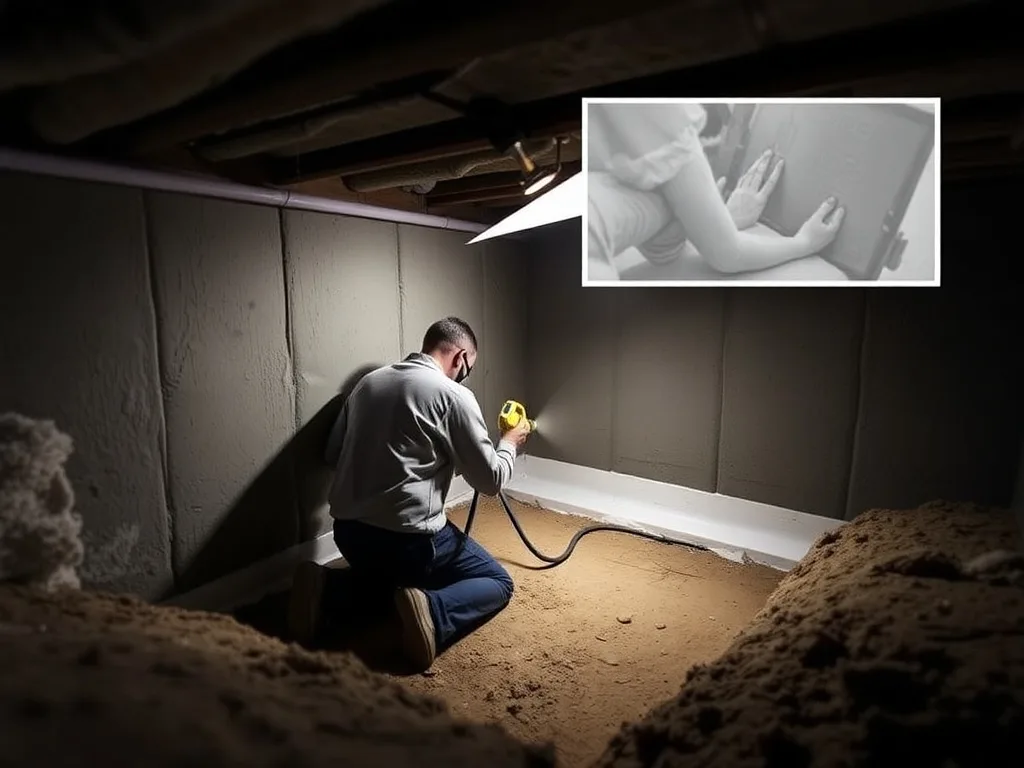
In St. George, the crawl space under your home does a lot more work than most homeowners realize. During the long stretch of 100°F+ days from June through September, the soil beneath your house absorbs and holds heat, then radiates it upward into your floor joists and sub-floor for hours after the sun goes down. At the same time, the mid-July through mid-September monsoon window brings sudden, heavy downpours that can overwhelm grading and drainage around a foundation almost overnight, pushing moisture-laden air into the crawl space through vents, gaps, and penetrations. Neither problem is theoretical — homeowners in St. George, Washington City, Hurricane, Santa Clara, and Ivins deal with both every summer.
This service is specifically the spray-foam application itself: closed-cell polyurethane foam sprayed directly onto crawl space perimeter walls, rim areas, and other targeted surfaces to create a continuous air and thermal seal. It is not a vapor-barrier-and-batt encapsulation package, and we don't sell it as one. That broader combination of ground vapor barriers, batt insulation, dehumidification equipment, and full encapsulation systems is a different, more general service best handled by a full-service general insulation contractor. We are a spray-foam-only specialist working exclusively in Washington County, and crawl space spray foam application is one of the eight things we do — full stop.
That focus matters. We're not a general insulation company that also does spray foam — spray foam is the only thing we do, which is why we do it better than anyone else in Washington County. When a crawl space needs closed-cell foam on its walls and rim areas to stop heat transfer and air infiltration, that's a job we run every week, with a crew that doesn't split its attention across blown-in cellulose, batts, and audits.
Why homeowners choose it
- Seals out ground-radiated heat that would otherwise transfer into floor joists and sub-flooring, keeping ground-floor rooms noticeably cooler through the hottest part of the day
- Closed-cell foam's moisture resistance is a genuine asset during monsoon season, when flash-flood-adjacent grading issues can push standing water and humid air toward crawl space vents
- Creates a continuous air seal on sprayed surfaces, cutting the infiltration path that lets hot, dusty summer air and monsoon humidity work into the crawl space and up into living areas above
- Rigid, high-density closed-cell foam (roughly R-6 to R-7 per inch) adds structural stiffening to the surfaces it's applied to, unlike batt or blown material
- Reduces AC runtime tied to floor-level heat gain, supporting lower Rocky Mountain Power and Dixie Power summer bills
- Straightforward, single-trade application — no separate vapor-barrier install, no encapsulation sales package, no add-on dehumidifier quote
The Ground-Heat Problem Most St. George Homeowners Don't See
Everyone in St. George understands attic heat — a dark roof deck baking in direct desert sun is an obvious heat source. Ground-radiated heat is less obvious, but it's just as real. Soil under and around a home's foundation absorbs solar heat all day during the long 100°F+ stretch that runs from mid-June through early September, then slowly releases that stored heat upward into the crawl space, through the sub-floor, and into the framing above. Unlike attic heat, which peaks in the afternoon and drops off at night, ground-radiated heat lags behind and can keep floor assemblies warmer into the evening hours, long after outdoor temperatures have dropped.
In a vented, un-treated crawl space, that heat transfers directly through the sub-floor into the rooms above with almost nothing standing in its way. Homeowners often notice it as floors or lower-level rooms that stay stubbornly warm even after the AC has been running all day. Applying closed-cell spray foam to the crawl space perimeter walls and rim areas interrupts that heat path at the source, before it ever reaches the living space.
The effect compounds over a St. George summer. Ground temperature doesn't reset overnight the way air temperature does, so a crawl space under an un-treated home can carry accumulated ground heat from one 100°F+ day into the next, and the next, through the entire mid-June-to-early-September stretch. By August, that thermal lag means the sub-floor and lower-level rooms are working against a heat source that's been building for weeks, not just reacting to that day's forecast. Sealing the perimeter walls and rim areas with closed-cell foam gives the framing above a real thermal break instead of a slow, cumulative heat soak.
Monsoon Moisture: The Other Half of the Crawl Space Equation
St. George's monsoon season, running roughly mid/late-July through early/mid-September, brings a very different kind of stress to a crawl space than the dry heat of June. Sudden, intense downpours can overwhelm yard grading and drainage patterns that work fine the rest of the year, sending water pooling toward foundation walls and crawl space vents in a matter of minutes. Even where flooding doesn't reach the crawl space directly, the humidity spike that follows a monsoon storm gets pulled into vented crawl spaces along with the hot outside air.
This is where closed-cell foam's material properties do real work. Closed-cell spray foam is a poor moisture absorber and doesn't wick water the way batt insulation or exposed wood framing can, so it holds up well against the humidity swings that come with monsoon-season storms hitting a vented crawl space. That resistance is a genuine advantage of the material — but again, foam application on the walls and rim is not the same undertaking as a full moisture-management encapsulation system with a sealed ground vapor barrier and dedicated dehumidification, which is a separate scope of work outside what we quote.
Washington County's grading and drainage patterns can behave unpredictably once a monsoon cell drops an hour of rain on ground that's been baked hard and dry for weeks. Water that would normally soak in or sheet away can instead pool along a foundation edge, and vented crawl space openings sitting near that grade line are directly exposed to whatever humidity and runoff finds its way there. A properly sealed, foam-treated perimeter wall doesn't fix drainage or grading — that's a separate conversation with a landscaper or grading contractor — but it does mean the crawl space walls themselves aren't absorbing and holding onto that seasonal moisture load.
What This Service Is — and What It Isn't
We spray closed-cell polyurethane foam onto crawl space perimeter walls, band/rim areas, and other targeted framing surfaces to build an air and thermal seal. That's the job, and it's a job we do well because it's one of only eight services we offer across Washington County.
What this service does not include: a ground-level vapor barrier laid across the crawl space floor, batt insulation between floor joists, mechanical dehumidification equipment, or a full 'encapsulation' package marketed as a whole-crawl-space moisture solution. Those are legitimate approaches to crawl space management, and homeowners who want that broader combination should talk to a full-service general insulation contractor. We stay in our lane: spray foam application, done right, every time.
- Included: closed-cell spray foam applied to accessible crawl space perimeter walls and rim/band areas
- Included: air-sealing at penetrations and gaps within the sprayed foam application scope
- Not included: ground vapor barrier installation
- Not included: batt insulation between floor joists
- Not included: dehumidification equipment or full encapsulation packaging
How the Application Works
Our crew accesses the crawl space, evaluates the perimeter walls, rim/band areas, and any framing surfaces relevant to the job, and applies closed-cell spray foam directly to those surfaces in controlled lifts to reach target thickness. Because closed-cell foam expands less dramatically than open-cell and cures rigid, it's well suited to the tight, often low-clearance conditions typical of a St. George crawl space.
Local code requirements for crawl space applications vary depending on the specific assembly and jurisdiction within Washington County, and our crew accounts for those requirements as part of every quote. Most crawl space spray foam jobs are completed in a single visit, and the work pairs naturally with rim joist/band joist spray foam or attic spray foam work scheduled for the same property, since our crew is already on site.
Before spraying, our crew walks the crawl space to flag anything that needs attention first — existing moisture staining, damaged framing, or ductwork and plumbing runs that need protection or masking during application. Closed-cell foam is applied in metered lifts rather than one thick pass, both for cure quality and for fire-code-compliant thickness control, and the crew checks coverage against the target assembly before calling the job finished. On tighter or lower-clearance crawl spaces common in older St. George construction, this careful, methodical approach matters more than it does in an open attic, where there's more room for error.
Why Spray-Foam-Only Focus Matters Here
Crawl space work is easy to bundle into a bigger sales package — vapor barrier, batts, a dehumidifier, a service plan — because most insulation contractors sell all of those things and want to sell you as much as possible in one visit. We don't carry that inventory or that incentive. Our only product is spray foam, applied correctly, to the surfaces that benefit from it.
That means when you call us for crawl space spray foam, you get a crew and an estimate focused entirely on the application itself: material selection, thickness, coverage, and code compliance for the spray foam job — not an upsell conversation about encapsulation systems we don't specialize in and won't pretend to.
Ideal for
- Homes with vented crawl spaces experiencing noticeably hot or cold floors depending on season, especially uncomfortable warmth radiating up during summer months
- Crawl spaces with visible air leakage, gaps around plumbing/electrical penetrations, or drafts at the rim area
- Homes in areas with known monsoon-season drainage or grading issues where crawl space vents take on humid air after summer storms
- New or existing homes in St. George, Washington City, Hurricane, Santa Clara, and Ivins with open rim joist or perimeter wall framing accessible for spray application
- Homeowners who specifically want closed-cell foam application on crawl space surfaces — not a full encapsulation system with vapor barrier, batts, and dehumidification
- Crawl spaces already scheduled for rim joist or attic spray foam work, where crawl space application can be added in the same visit
What affects the cost
Crawl Space questions, answered
No. This service is the spray-foam application to crawl space perimeter walls and rim/band areas only. Ground vapor barriers, batt insulation, dehumidification equipment, and full encapsulation packages are a different scope of work best handled by a full-service general insulation contractor.
Vents alone don't stop ground-radiated heat from transferring into your floor framing during the long St. George summer, and they can actually let in humid, monsoon-affected air rather than keeping it out. Spray foam on the perimeter walls interrupts that heat path and reduces air infiltration directly at the source.
Closed-cell spray foam is highly resistant to moisture absorption, which makes it a solid material choice for the humidity spikes and occasional flash-flood-adjacent drainage issues that follow summer monsoon storms in Washington County. It does not wick or hold water the way batt insulation or exposed wood can.
Yes. It's common for us to schedule crawl space spray foam alongside attic spray foam or rim joist/band joist spray foam on the same visit, since the crew and equipment are already on site.
We serve St. George, Washington City, Hurricane, Santa Clara, Ivins, and a lighter service area extending to LaVerkin and Toquerville — all within Washington County.
Crawl Space done right, by a local Washington County crew
We're a spray-foam-only specialist — not a general insulation contractor that also offers spray foam as one option among many. Crawl Space isn't a commodity, and the result depends entirely on how carefully it's scoped and installed for your specific home in a genuine hot-desert climate. We assess what your house actually needs, prep and air-seal properly, and install to your elevation-appropriate, IECC Zone 3B R-value target, so the work delivers the cooling-bill relief it's supposed to.
We serve St. George, Washington City, Hurricane, Santa Clara, Ivins, LaVerkin, and Toquerville. St. George's summers are the whole story here — dark roof decks push attic temperatures to 130-150°F+ from May through September, and that heat radiates straight down into living space and forces your AC to run nearly nonstop. We scope every job around that cooling load, not around a heating-season assumption borrowed from a colder climate. Every job starts with a free, no-pressure quote.
Just as important, we treat your home like the system it is. Insulation, air sealing, and ventilation all interact, and getting one right while ignoring the others leaves comfort and savings on the table. When we scope your crawl space, we look at how it fits the whole picture — so the finished result performs the way it should, holds up through a genuine St. George summer, and actually lowers the AC bills you feel every month, whether you're served by Rocky Mountain Power (including its Wattsmart Homes program) or Dixie Power.
Free assessment
We evaluate your home and give you a clear, itemized quote.
Expert install
We prep, air seal, and install your crawl space to spec — clean and on schedule.
Savings you can feel
A cooler home, lower AC bills, and honest advice about what your home needs.
Related services
Ready for a free crawl space quote?
Tell us about your home and we'll put together a clear, no-pressure spray foam insulation quote — built for St. George's real summers.