Garage Spray Foam Insulation
Closed-cell and open-cell spray foam applied to garage walls, ceilings, and header areas to stop desert heat from turning your garage into a 130°F box — and from radiating that heat straight into the rooms next door.
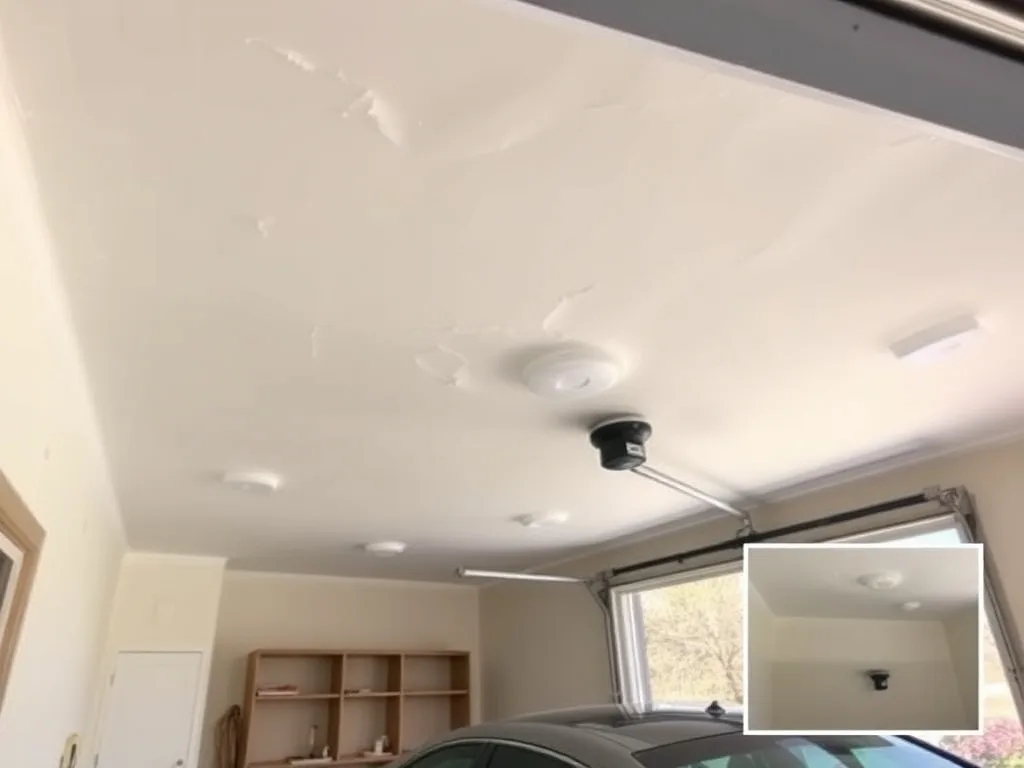
In most St. George homes, the garage is the one room nobody planned for the desert. It usually shares at least one wall with a bedroom, laundry room, or hallway, and it almost never got the same insulation attention as the rest of the house during construction. The result shows up every summer: by early afternoon in June through August, an unconditioned or under-insulated garage in Washington County routinely climbs past 120°F, and on the worst south- and west-facing garages, we've measured surfaces and air temps pushing 130°F or higher against a hot garage door and sun-baked exterior wall.
That heat doesn't stay contained. It soaks into the shared wall assembly, the header over the garage-to-house door, and the ceiling below any bonus room or bedroom above the garage, then radiates into the living space your air conditioner is already working overtime to cool. Homeowners feel it as a bedroom that never quite cools down, a laundry room that's uncomfortable to stand in, or an AC system that runs constantly trying to fight heat gain it can't see.
We're not a general insulation company that also does spray foam — spray foam is the only thing we do, which is why we do it better than anyone else in Washington County. For garages, that focus matters: spray foam is the only insulation approach that both air-seals and thermally isolates a garage in one application, which is exactly what a hot, leaky garage box in St. George needs. Whether your garage is a pass-through storage space you'd rather forget about or a workshop, home gym, or overflow living area you actually want to use twelve months a year, spray foam insulation is how you take a 130°F liability and turn it into usable, temperature-stable square footage.
Why homeowners choose it
- Stops garage heat from radiating through shared walls and ceilings into adjacent bedrooms, hallways, and laundry rooms
- Brings a 120-130°F summer garage down to a range where it's actually usable as a workshop, gym, or storage area
- Air-seals the header, top plate, and rim areas around the garage-to-house entry — a chronic hot-air leak point in slab-on-grade and platform-framed St. George homes
- Reduces AC runtime on the rooms sharing a wall or ceiling with the garage, easing strain during the May-through-September cooling season
- Closed-cell foam adds rigidity to garage wall and ceiling assemblies, useful where framing is exposed to bumps, storage racks, or gym equipment
- One spray-foam-only crew handling the whole garage envelope, instead of piecing together batts, foam board, and caulk yourself
Why St. George garages run hotter than the rest of the house
A garage is architecturally exposed in ways the rest of your house isn't. It typically has a large, thin-skinned overhead door with minimal insulating value, at least one and often two or three exterior walls taking direct desert sun, and — critically — it's usually excluded from the home's conditioned envelope entirely. No supply vent, no return, no thermostat control. It just absorbs heat all day with nothing pushing back.
Add in a south- or west-facing exposure, which is common across St. George, Washington City, and Hurricane subdivisions, and that garage becomes a heat trap: block walls or wood-framed walls with little to no cavity insulation, a ceiling separating it from living space above with the same gap, and a slab floor that re-radiates stored heat well into the evening. By 3 or 4 p.m. in July, it's not unusual for that garage to be 20-30 degrees hotter than the outside air in the shade.
Because the garage sits directly against conditioned space — sharing a wall with a bedroom, a ceiling with a bonus room, or a header with the main hallway — all of that trapped heat has a direct path into the part of the house you're paying to keep at 74°F. Spray foam breaks that path by sealing and insulating the garage-side surfaces in one continuous application, instead of relying on gaps in fiberglass batts or a door threshold sweep to do the job.
- Large garage doors with minimal R-value transmit heat directly into the garage cavity
- South/west-facing garage walls take the most direct desert sun exposure of any room in the house
- Slab floors and block walls store and re-radiate heat well after sunset
- Shared walls, ceilings, and headers create a direct thermal bridge into living space
The usable-space problem: workshops, gyms, and storage ruined by heat
The temperature swing is more than an energy-bill issue — it's why so many St. George garages end up as dead space. A home gym with a squat rack and a stack of dumbbells is unusable when the garage hits 125°F at 5 p.m., which is exactly when most people want to work out after work. A workshop with power tools, a woodworking bench, or a hobby setup becomes a place you avoid touching from June through September because the heat alone is exhausting to stand in, before you've picked up a single tool.
Storage takes damage too. Paint, electronics, canned goods, medications, musical instruments, and anything with a plastic housing or a battery degrades faster in a garage that swings between 40°F winter nights and 130°F summer afternoons than it would in a temperature-stable space. We regularly hear from homeowners who moved boxes into the garage assuming it was fine for storage, only to find warped, melted, or degraded contents a season later.
Spray foam insulation on the walls and ceiling — paired with weatherstripping and a properly sealed garage door threshold — brings that swing down dramatically. It won't make an unconditioned garage as cool as the air-conditioned house, but it takes the ceiling off the heat problem enough that a window unit, a mini-split, or even just a fan and the reduced heat load makes the space genuinely usable as a workshop, gym, or storage area again, instead of a 130°F box you open the door to and immediately close.
Where we apply foam in a garage insulation job
Every garage is laid out a little differently, so the exact scope depends on what's sharing a wall or ceiling with your living space and what condition the framing is in. In general, a garage spray foam job in St. George focuses on the surfaces that either take direct sun or sit against conditioned space:
We use closed-cell foam on exterior walls and the ceiling where structural rigidity and higher R-value per inch matter most, particularly on garages with exposed framing or storage racks that will bump against the assembly. Open-cell foam is a cost-effective option for interior partition walls between the garage and non-critical spaces, where air-sealing is the priority over maximum thermal resistance.
- Exterior garage walls, especially south- and west-facing exposures taking direct sun
- The wall shared between the garage and any adjacent bedroom, office, laundry room, or hallway
- The garage ceiling below any bonus room, bedroom, or living space built above
- The header and rim area around the garage-to-house entry door — a common hidden air-leak point
- Rim joists and band joists in garages with a raised floor system rather than a slab
How garage foam ties into the rest of your home's thermal envelope
If you've already had us seal and insulate your attic under our attic and roof-deck service, the garage is usually the next-biggest heat gap in the house. An attic conversion stops 130-150°F hot-roof-deck heat from radiating into your ceilings; garage insulation stops a 120-130°F garage from doing the same thing sideways, through shared walls. Treating both closes off the two largest sources of secondary heat gain most St. George homes have — the ones that don't show up as an obvious draft but still drive your Rocky Mountain Power or Dixie Power bill up every summer.
A growing number of St. George and Desert Color floor plans put a bedroom, bonus room, or media room directly above a two- or three-car garage, which means the garage ceiling is doing double duty as someone's floor. If that ceiling cavity was never sprayed or only got a thin layer of batt insulation during the original build, the room above absorbs garage heat from below all afternoon, on top of whatever heat gain it's already taking from the roof or exterior walls. The same layout shows up in reverse on some Hurricane and Santa Clara lots, where a garage sits partially below grade or beneath a walkout living area — in either configuration, spray foam applied to the full ceiling plane between the garage and the room above closes off that transfer path, rather than leaving it to a few inches of loosely fitted batt insulation that was never air-sealed at the edges in the first place.
For homes still in the design or framing stage, garage spray foam is easiest and most cost-effective to install before drywall goes up, which is why we work directly with builders and remodelers across the Washington Fields, Little Valley, Desert Color, and Hurricane growth corridors on new-construction garage packages. For existing homes, we can install from the garage side without opening up the finished wall in the adjacent room, in most cases.
What to expect on installation day
A typical garage insulation job in St. George takes a single day for most single- or two-car garages, longer for oversized three-car or RV garages. We protect the slab, any remaining stored items, and garage door tracks and openers before spraying, then apply foam to the specified walls and ceiling per the plan we walk through with you beforehand.
Because closed-cell and open-cell foam expand and cure quickly, the space is typically clear to re-enter and use within the manufacturer's recommended re-occupancy window the same day, with full cure completing over the following 24 hours. We'll walk the finished job with you before we leave so you can see exactly where foam was applied and why.
Ideal for
- Homeowners whose garage shares a wall with a bedroom, office, or living space that stays warm all summer
- Anyone converting a garage into a home gym, workshop, or hobby space that needs to stay usable in July and August
- Homes with a bonus room, bedroom, or bathroom built directly above the garage ceiling
- New builds and remodels in Washington Fields, Little Valley, Desert Color, Hurricane, and similar growth-corridor neighborhoods where garages are getting larger
- Garages with unfinished or poorly insulated walls and ceilings that were treated as an afterthought during original construction
- Homeowners who've already sealed and insulated their attic and want to close the next-biggest heat gap in the house
What affects the cost
Garage Insulation questions, answered
Yes. Closed-cell and open-cell spray foam air-seal and insulate the wall and ceiling cavities in one application, which stops the bulk of the heat that's currently soaking through bare or under-insulated framing. It won't turn an unconditioned garage into an air-conditioned room, but it significantly reduces peak temperatures and, more importantly, stops that trapped heat from radiating into the bedroom, hallway, or bonus room next door.
In most cases, yes, noticeably. If a bedroom, office, or laundry room shares a wall or ceiling with an uninsulated garage, that surface is acting as a direct heat-transfer path all summer. Sealing and insulating the garage side of that assembly with spray foam cuts off most of that transfer, which typically shows up as a room that holds its temperature better and an AC system that doesn't have to work as hard to keep it there.
Garage door insulation is a separate product from wall and ceiling spray foam, and it's worth doing if your door doesn't already have it, but the bigger gains for most St. George homes come from the walls and ceiling, especially the shared wall against living space and the ceiling below a room above. We'll assess your specific garage and tell you honestly where the foam will make the most difference.
Usually both, depending on the surface. We typically recommend closed-cell foam on exterior walls and ceilings taking direct sun exposure or requiring added rigidity, and open-cell foam on interior partition walls where air-sealing is the priority and maximum R-value per inch matters less. We'll walk through the specific recommendation for your garage layout before starting work.
Yes. Closed-cell and open-cell spray foam cure quickly, and most garages are ready for normal use within the manufacturer's recommended re-occupancy window on the same day, with full cure completing over the following 24 hours. Once cured, the space holds up well to normal workshop, gym, and storage use.
Garage Insulation done right, by a local Washington County crew
We're a spray-foam-only specialist — not a general insulation contractor that also offers spray foam as one option among many. Garage Insulation isn't a commodity, and the result depends entirely on how carefully it's scoped and installed for your specific home in a genuine hot-desert climate. We assess what your house actually needs, prep and air-seal properly, and install to your elevation-appropriate, IECC Zone 3B R-value target, so the work delivers the cooling-bill relief it's supposed to.
We serve St. George, Washington City, Hurricane, Santa Clara, Ivins, LaVerkin, and Toquerville. St. George's summers are the whole story here — dark roof decks push attic temperatures to 130-150°F+ from May through September, and that heat radiates straight down into living space and forces your AC to run nearly nonstop. We scope every job around that cooling load, not around a heating-season assumption borrowed from a colder climate. Every job starts with a free, no-pressure quote.
Just as important, we treat your home like the system it is. Insulation, air sealing, and ventilation all interact, and getting one right while ignoring the others leaves comfort and savings on the table. When we scope your garage insulation, we look at how it fits the whole picture — so the finished result performs the way it should, holds up through a genuine St. George summer, and actually lowers the AC bills you feel every month, whether you're served by Rocky Mountain Power (including its Wattsmart Homes program) or Dixie Power.
Free assessment
We evaluate your home and give you a clear, itemized quote.
Expert install
We prep, air seal, and install your garage insulation to spec — clean and on schedule.
Savings you can feel
A cooler home, lower AC bills, and honest advice about what your home needs.
Related services
Ready for a free garage insulation quote?
Tell us about your home and we'll put together a clear, no-pressure spray foam insulation quote — built for St. George's real summers.