Closed-Cell Spray Foam Insulation
High-density closed-cell spray foam delivers R-6 to R-7 per inch, structural rigidity, and a genuine moisture barrier for the assemblies in a St. George home that take the hardest hit from desert heat and monsoon storms — roof decks, rim joists, and exterior-adjacent walls.
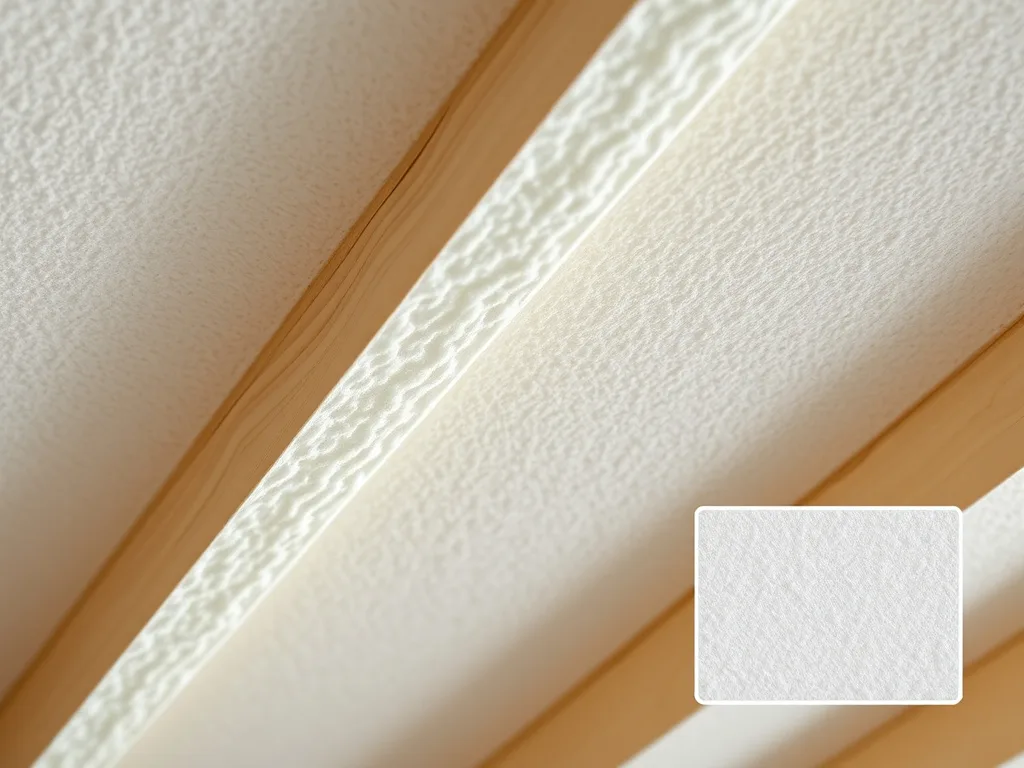
Not every assembly in a St. George home faces the same heat load. A roof deck baking under direct desert sun can hit 130 to 150°F or more on a July afternoon, and that heat doesn't stay put — it radiates straight down into ductwork, attic framing, and ceiling drywall for hours after sunset. Rim joists sit at the foundation perimeter, exposed on the exterior side and framed with gaps and seams that let hot air pour into the house every summer. Exterior-adjacent walls on the west and south elevations absorb direct solar gain all afternoon. These are the spots where a standard insulation material simply isn't dense enough to do the job.
Closed-cell spray foam is the higher-density option in the spray foam family, running roughly R-6 to R-7 per inch compared to open-cell's R-3.5 to R-3.7 per inch. That density means less material thickness is needed to hit a target R-value, which matters in rim joist bays and roof-deck rafter cavities where space is limited. It also means the cured foam is rigid enough to add real structural stiffening to the framing it's sprayed against — something no batt or blown-in product can claim.
The other half of the story is moisture. St. George's monsoon season, roughly mid-to-late July through early-to-mid September, brings sudden humidity spikes, wind-driven rain, and flash-flood-adjacent moisture intrusion at exactly the building assemblies most exposed to the outside: roof decks and rim joists. Closed-cell foam's tight cell structure gives it a very low water absorption rate and functions as its own vapor retarder, which is exactly the property you want at a foundation perimeter or an unvented roof assembly during a monsoon downpour.
We're not a general insulation company that also does spray foam — spray foam is the only thing we do, which is why we do it better than anyone else in Washington County. Closed-cell application in particular rewards that specialization: correct yield, correct pass thickness, and correct cure conditions are the difference between a rigid, air-sealed assembly and a foam job that under-delivers on both R-value and structural benefit.
Why homeowners choose it
- R-6 to R-7 per inch — the highest R-value per inch of any insulation material commonly used in St. George homes, letting us hit code-level or above-code R-values in tight cavities like rim joist bays.
- Adds real structural rigidity to roof decks, rim joists, and wall framing — rigid closed-cell foam bonds to and stiffens the wood it's sprayed against, which open-cell foam and batt products don't provide.
- Genuine monsoon moisture resistance — low water absorption and vapor-retarder performance at the building's most exposed, most exterior-facing assemblies.
- Stops radiant heat transfer from 130-150°F+ roof decks before it reaches ductwork and ceiling drywall, easing AC runtime through the May-through-September cooling season.
- Seals the chronic air-leak point at rim joists and band joists, cutting hot-air infiltration and monsoon-season dust and debris intrusion at the foundation perimeter.
- One continuous spray-applied layer eliminates the seams and compression gaps that let conditioned air escape through fiberglass batts or degraded blown-in material.
Where closed-cell foam earns its higher cost
Closed-cell spray foam runs at the higher end of the spray foam cost range, and in a hot desert market like St. George that premium is easiest to justify at the assemblies taking the most direct heat and moisture exposure: unvented roof decks, rim joists, and exterior-adjacent wall sections. Those are the spots where R-value per inch, structural rigidity, and moisture resistance all matter simultaneously — and where a lower-density material would need to be applied much thicker, if it could even fit the cavity, to deliver comparable performance.
For interior partition walls or non-roof-deck attic floor work where moisture resistance and rigidity aren't the driving concern, open-cell spray foam is usually the more cost-effective choice. Part of an honest specialist recommendation is telling you where closed-cell is worth the premium and where it isn't — we'll walk your specific assemblies with you before quoting either product.
Roof decks: stopping the 130-150°F heat load at the source
A dark asphalt shingle roof deck under direct St. George sun in July regularly reaches 130 to 150°F or higher, and that heat doesn't stop at the shingles — it conducts through the roof deck and radiates into the rafter bay, the attic, the ductwork running through it, and eventually the ceiling drywall below. In a vented attic with standard floor insulation, that heat load still bakes everything above the living space all afternoon and into the evening.
Closed-cell foam applied directly to the underside of the roof deck converts that vented attic into a sealed, conditioned space at the building envelope. The rigid foam layer resists heat transfer at R-6 to R-7 per inch, and because it's a continuous spray-applied membrane rather than a batt laid between rafters, there are no gaps or compression points for heat to bridge through. Ductwork and equipment that used to sit in a 130°F+ superheated attic now sit in a space close to conditioned-space temperature, which is where much of the AC-bill savings on this application come from.
- Applied to the underside of the roof deck, converting a vented attic into sealed conditioned space
- R-6 to R-7 per inch cuts required thickness versus lower-density materials in tight rafter bays
- Continuous seamless application eliminates compression gaps and thermal bridging at rafters
- Rigid cured foam adds stiffening to the roof deck assembly itself
Rim joists and band joists: sealing the foundation perimeter
The rim joist, sometimes called the band joist, runs around the entire perimeter of a home where the floor framing meets the foundation. It's framed with dozens of small gaps, seams, and penetrations, and because it sits at the very edge of the conditioned envelope, it's one of the most consistent sources of hot-air infiltration in a St. George home during the cooling season — and one of the most overlooked, since it's usually hidden behind crawl space or basement framing.
Closed-cell foam sprayed directly into rim joist bays seals every gap in a single application, stopping infiltration and adding a genuine air barrier where none existed before. During monsoon season, that same seal keeps wind-driven rain, dust, and debris from working into the same gaps from the exterior side. Rim joist sealing is also one of the easiest upsells to pair with an attic or crawl space job already underway, since the crew and equipment are typically already on site.
- Seals dozens of small framing gaps around the entire foundation perimeter in one pass
- Stops hot-air infiltration at one of the most overlooked leak points in the building envelope
- Blocks monsoon-season wind-driven moisture, dust, and debris intrusion from the exterior side
- Commonly paired with an attic or crawl space job for efficiency
Exterior-adjacent walls: rigidity plus heat-gain resistance
West- and south-facing exterior walls in St. George take direct solar gain for hours every summer afternoon, and older fiberglass batt insulation in those cavities often settles, compresses, or was never installed cleanly around wiring and plumbing penetrations to begin with. Closed-cell foam sprayed into these wall cavities fills the full cavity depth around obstructions, seals air leaks, and delivers more R-value per inch than the batt or open-cell alternative — while also stiffening the wall assembly.
For homeowners who've noticed a west-facing bedroom or living room stays noticeably warmer into the evening than the rest of the house, closed-cell foam in that specific wall section is often the more effective fix than an open-cell application, given the added heat-gain resistance per inch.
New construction and monsoon-ready building
Builders and GCs working the St. George growth corridor — Washington Fields, Little Valley, Desert Color, and Hurricane — use closed-cell foam at roof decks and rim joists specifically to hit or exceed 2021 IECC Zone 3B code minimums in a single trade visit, while also building in monsoon-season moisture resistance at the assemblies most exposed to wind-driven rain during framing and after occupancy. The rigidity closed-cell foam adds at the roof deck and rim joist is a meaningful bonus in high-wind monsoon conditions, beyond the insulation value itself.
Because closed-cell foam cures rigid and bonds to the framing it's sprayed against, it also stiffens roof decks and rim joist assemblies during the framing stage — before drywall or exterior finishes go on, when that added structural contribution is easiest to design around. Builders running a new-construction schedule through the hottest months of the year appreciate that a single closed-cell application at the roof deck and rim joist perimeter covers insulation value, air sealing, and moisture resistance in one trade visit, rather than coordinating separate batt insulation, a housewrap detail, and a rim joist sealant pass.
Why correct application matters more with a higher-density product
Closed-cell foam is far less forgiving of a rushed or under-qualified installation than open-cell foam or batt insulation. It cures in a series of controlled passes at a specific thickness per pass — spray it too thick in one pass and the exothermic curing reaction can generate excess heat inside the foam, risking scorching or off-gassing; spray it too thin or unevenly and you lose the density that gives closed-cell its R-value and rigidity advantage in the first place. Getting the yield, pass thickness, and cure conditions right consistently, cavity after cavity, roof deck after roof deck, is a skill set built from doing nothing else all day.
That's a direct extension of why we stay a spray-foam-only specialist rather than a general insulation company that also offers spray foam as one line item among many. A crew that installs closed-cell foam every week, in every rim joist bay and roof deck configuration St. George's housing stock throws at them, catches the cavity-specific judgment calls — ventilation baffles, ignition-barrier requirements over living space, correct standoff from recessed lighting and flues — that a crew splitting its time across blown-in, batts, and foam is more likely to miss.
Ideal for
- Roof decks and rafter cavities being converted to a sealed, conditioned attic assembly
- Rim joist and band joist perimeters at the foundation, especially ahead of monsoon season
- West- and south-facing exterior walls taking direct desert solar gain all afternoon
- Homeowners who want the most R-value per inch of cavity depth available
- New construction and additions in growth corridors like Washington Fields, Little Valley, and Desert Color that need to hit or exceed 2021 IECC Zone 3B code minimums
- Any assembly where added rigidity or a genuine moisture barrier is part of the specification, not just insulation value
What affects the cost
Closed-Cell Spray Foam questions, answered
Closed-cell foam is denser, runs R-6 to R-7 per inch versus open-cell's R-3.5 to R-3.7 per inch, adds structural rigidity, and provides genuine moisture resistance — making it the right call for roof decks, rim joists, and exterior-adjacent walls. Open-cell is a more economical air-sealing option for interior walls and non-roof-deck attic floor areas where moisture resistance and rigidity aren't the deciding factor.
It depends on the assembly. At a roof deck, rim joist, or exterior-adjacent wall facing direct desert heat and monsoon moisture exposure, closed-cell's density and moisture resistance typically justify the premium. For interior partition walls or attic floor work with no direct exterior exposure, open-cell is usually the more cost-effective choice. We'll recommend the right product per assembly rather than defaulting to one everywhere.
Yes. Closed-cell foam's tight cell structure gives it very low water absorption and functions as its own vapor retarder, which is exactly what you want at a rim joist or roof deck during a St. George monsoon downpour with wind-driven rain.
In most cases, yes. Rim joist bays are typically accessible from a crawl space or basement side without needing to remove finished flooring or exterior siding, which is part of why rim joist sealing is such a common add-on to an attic or crawl space job already in progress.
It depends on the cavity depth and your target R-value against the 2021 IECC Zone 3B code recommendations used in this area. Because closed-cell delivers R-6 to R-7 per inch, we can typically hit a strong target R-value in less thickness than open-cell or batt alternatives would require — we'll spec exact thickness on a walkthrough.
Closed-Cell Spray Foam done right, by a local Washington County crew
We're a spray-foam-only specialist — not a general insulation contractor that also offers spray foam as one option among many. Closed-Cell Spray Foam isn't a commodity, and the result depends entirely on how carefully it's scoped and installed for your specific home in a genuine hot-desert climate. We assess what your house actually needs, prep and air-seal properly, and install to your elevation-appropriate, IECC Zone 3B R-value target, so the work delivers the cooling-bill relief it's supposed to.
We serve St. George, Washington City, Hurricane, Santa Clara, Ivins, LaVerkin, and Toquerville. St. George's summers are the whole story here — dark roof decks push attic temperatures to 130-150°F+ from May through September, and that heat radiates straight down into living space and forces your AC to run nearly nonstop. We scope every job around that cooling load, not around a heating-season assumption borrowed from a colder climate. Every job starts with a free, no-pressure quote.
Just as important, we treat your home like the system it is. Insulation, air sealing, and ventilation all interact, and getting one right while ignoring the others leaves comfort and savings on the table. When we scope your closed-cell spray foam, we look at how it fits the whole picture — so the finished result performs the way it should, holds up through a genuine St. George summer, and actually lowers the AC bills you feel every month, whether you're served by Rocky Mountain Power (including its Wattsmart Homes program) or Dixie Power.
Free assessment
We evaluate your home and give you a clear, itemized quote.
Expert install
We prep, air seal, and install your closed-cell spray foam to spec — clean and on schedule.
Savings you can feel
A cooler home, lower AC bills, and honest advice about what your home needs.
Related services
Ready for a free closed-cell spray foam quote?
Tell us about your home and we'll put together a clear, no-pressure spray foam insulation quote — built for St. George's real summers.